SIP & WebRTC Latency
Regional SFU PoP Placement: Cutting RTP RTT Below 35 ms
Why cross-ocean RTP hairpins add 140 ms jitter and how regional Vultr PoP routing locks 35 ms transport.
35 ms regional RTT · 32 Vultr PoPs · $24/mo
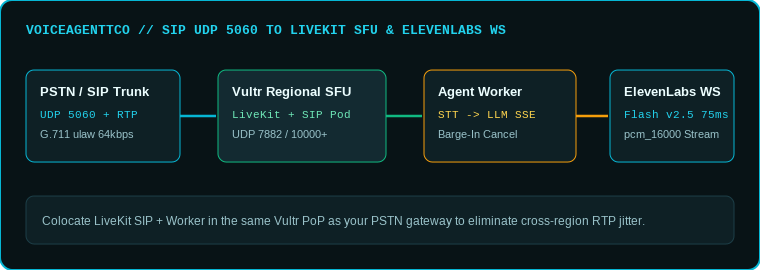
Eliminate Intercontinental Media Hairpins
Routing a London PSTN call through an Ashburn SIP bridge and back to a Frankfurt browser agent adds 150 ms of unavoidable speed-of-light delay. Deploying regional Vultr HF SFU pods in EWR, LAX, and FRA keeps RTP round-trips near 25-35 ms.
Anycast DNS + Geo-Latency Routing
Binding your SIP trunk URI and WebRTC ICE endpoints to latency-steered DNS records lands each caller on the closest PoP while sharing centralized state over Redis.
Measured Pipeline Thresholds
| Single US-East Node (Global) | 115-190 ms EU RTT | Noticeable talk-over delay |
| Regional Vultr PoP (EWR+FRA) | 25-35 ms RTP RTT | $48/mo total for dual-region |
| Tri-Region Mesh (+SGP/NRT) | 28-42 ms APAC RTT | $72/mo · 9 TB included transfer |