SIP & WebRTC Latency
SIP UDP 5060 Signaling & RTP 10000-10200 Sizing
Port allocation math, SIP OPTIONS keepalives, and host-network Docker flags for carrier trunks.
2 UDP ports/call · 10000-10200 = 100 calls
Two-Port-Per-Call RTP Math
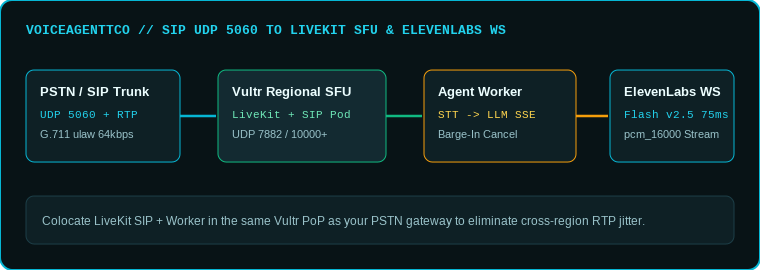
Every active G.711 or Opus SIP leg consumes one even UDP port for RTP media and one odd port for RTCP feedback. Mapping 10000-10200 supports up to 100 concurrent calls; use Docker network_mode: host to bypass userland NAT overhead.
NAT Binding & SIP Keepalives
Carrier SBCs drop idle UDP signaling pinholes after 30-60 seconds. Enabling 25-second SIP OPTIONS pings ensures inbound INVITE packets never hit stale firewall bindings.
Measured Pipeline Thresholds
| 50 Concurrent SIP Lines | 100 UDP ports (10000-10099) | 3.2 Mbps symmetric RTP |
| 100 Concurrent SIP Lines | 200 UDP ports (10000-10199) | 6.4 Mbps symmetric RTP |
| 400 Concurrent SIP Lines | 800 UDP ports (10000-10799) | 25.6 Mbps · dedicated SFU |